

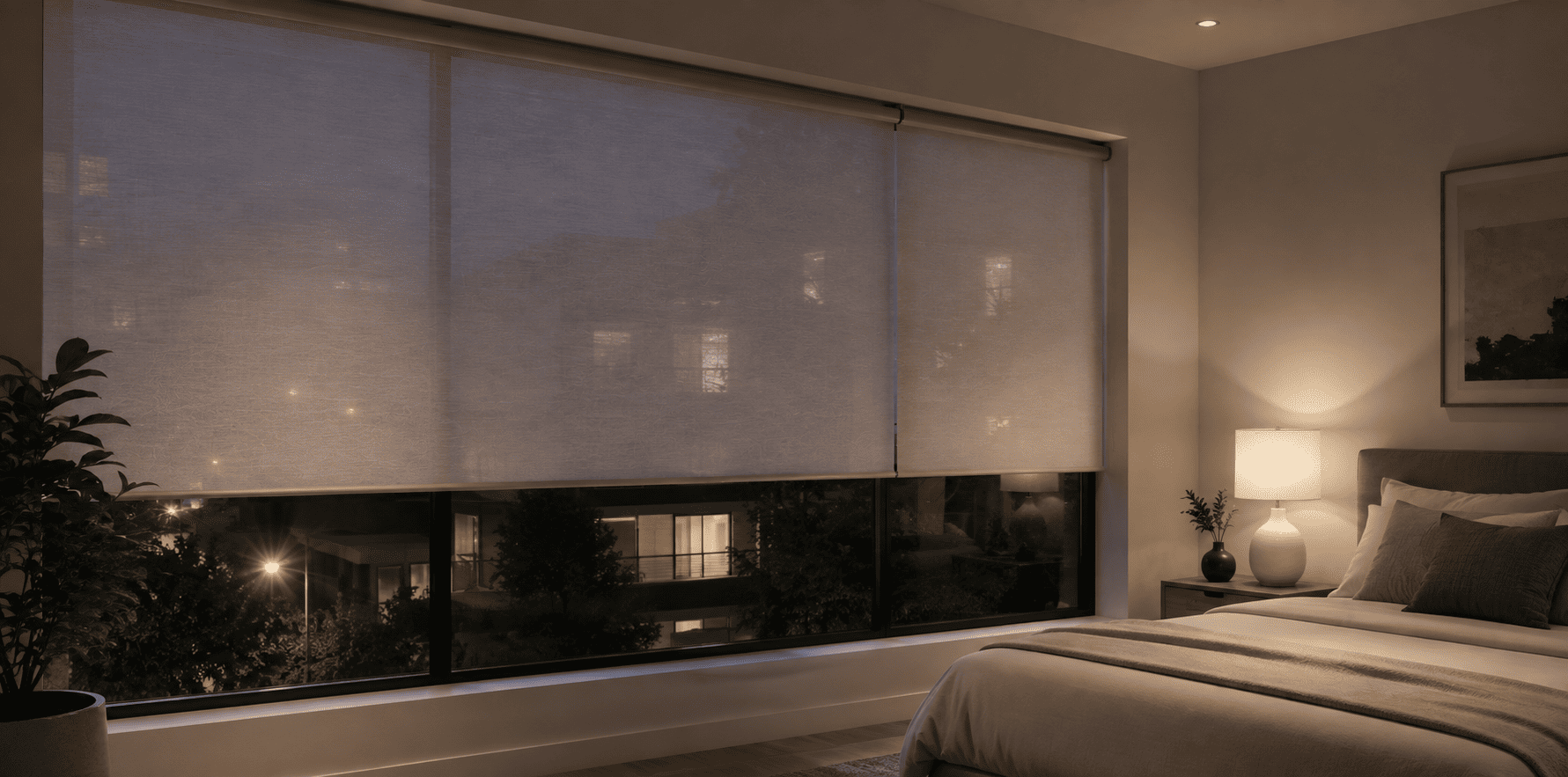
Light filtering roller blinds are designed to soften daylight while helping maintain privacy, but their performance changes after dark. During the day, the brighter outdoor light makes it difficult to see into a room through many light filtering fabrics. At night, however, indoor lighting can make the room more visible from outside, particularly with thinner roller blind fabric. Understanding this day-to-night difference is important when choosing roller blinds for bedrooms, living areas or street-facing windows. If nighttime privacy is a priority, you may need a different level of coverage.
How light filtering roller blinds work during the day
During the day, light filtering roller blinds generally give you the privacy most people are looking for. The fabric softens harsh sunlight and glare while still letting plenty of natural light into the room. With the outside brighter than the inside, it is usually difficult for people outside to see clearly through the blind.
That is also why the fabric can look so good when you first see it in a showroom – you see the soft light and privacy working together. The important part is that this effect depends on the difference between indoor and outdoor light, which changes completely once the sun goes down.
Why privacy changes completely after dark
Here’s the catch with light filtering roller blinds: the privacy you enjoy during the day can change once it gets dark outside. It all comes down to where the light is coming from. In daylight, the outdoors is brighter, so your blind can make it difficult for someone outside to see in. At night, your lights turn the room into the brighter side, and that can make what’s happening inside easier to notice.
- Standing outside: you may see silhouettes or movement through a lighter roller blind fabric when the room is lit.
- From a nearby house: visibility can increase if a neighbour’s window has a clear view of yours.
- Want privacy after sunset? You’ll generally need a more opaque fabric or a blackout option rather than relying on daytime privacy alone.
Low openness versus high openness fabrics
That change in privacy after dark also comes down to the roller blind fabric itself. Not all light filtering fabrics behave the same way at night, so the weave and openness matter when you’re choosing between better outside views and stronger privacy.
- Lower openness: the tighter weave limits the view through the blind, helping reduce glare and making it harder to see into the room at night.
- Higher openness: allows more daylight and a clearer view out, but gives up some privacy once your indoor lights are on.
If daytime brightness and outside views matter most, a more open fabric may suit you. If evening privacy matters more, a tighter fabric is worth considering.
Light filtering, sunscreen or blockout blinds - what's the difference?
Now that you know fabric openness can change how much privacy you get after dark, the next question is which roller blind style actually suits your room. The difference between light filtering, sunscreen and blockout is less about choosing a “better” fabric and more about deciding how much light and visibility you are comfortable with at night.
- Light filtering: keeps the room softly lit during the day, but some visibility may remain when your lights are on.
- Sunscreen: gives excellent daytime glare control and outside views, but is generally not designed for complete nighttime privacy.
- Blockout: reduces outside visibility and incoming light much more, making it worth considering for bedrooms or privacy-focused spaces.
For durability and maintenance, see our existing roller blind fabric guide for a deeper comparison.
Which rooms need more than a light filtering blind?
Once you know how much privacy your roller blind fabric gives you after dark, look at the room itself. A light filtering blind can be perfectly practical where outside visibility is limited, but it may feel too exposed in rooms that are overlooked.
- Bedrooms and bathrooms: privacy matters more here, especially with nearby homes or street views.
- Street-facing rooms: passing pedestrians may have a clear line of sight at night.
- Evening-use offices: consider what can be seen behind you during video calls.
- Nearby or elevated windows: the closer or more direct the view, the greater the privacy concern.
For these spaces, fabric roller blinds with more coverage or blackout blinds Perth options may be worth considering.
How to keep daylight and still have privacy at night
If you like the daytime feel of light filtering roller blinds but don’t want to give up privacy after sunset, you don’t necessarily have to choose one or the other. A layered setup can give you more control as the light changes.
- Dual roller systems: pair a light-filtering blind with a blockout blind, using each when needed.
- Blind + curtain: keep daylight through the day, then close the curtain at night.
- Side channels: can help reduce light gaps around a blockout blind.
- Blind position: closing the blind fully at night gives you more privacy than leaving it partially raised.
The key is choosing the setup around how the room is actually used, rather than judging fabric roller blinds only in daylight.
Does fabric colour change what people can see?
It can. A lighter fabric may make it easier to see shadows or movement when the room is lit, while darker fabrics can change how light and silhouettes appear. The backing and overall construction matter too, so colour alone should not be your deciding factor.
How to test a fabric before you order
Since colour and fabric openness can change what you see at night, don’t rely on a showroom sample alone. A quick real-world test can tell you far more before you commit to your fabric roller blinds.
- Test after dark: hold the sample against your window with the room lights on and check the view from outside.
- Ask at the measure: confirm the exact roller blind fabric being quoted, including its openness and backing, so you are testing the same specification.
The right balance of light and privacy
So, can people see through light filtering roller blinds at night? Sometimes, yes – and that is the detail worth understanding before you choose your fabric. They can give you beautiful natural light and useful daytime privacy, but that privacy can change once your indoor lights become the brightest source.
If nighttime privacy is important, think about the room, how exposed the window is and how much visibility you are comfortable with. A tighter fabric, blockout option or layered setup may give you the extra privacy you need without sacrificing daytime comfort entirely.
The smartest choice is not simply about picking a blind that looks good in a showroom. Test the roller blind fabric, consider how you actually use the room and make sure the final setup matches both your daytime and nighttime needs. Talk to Marvel Blinds for expert advice on choosing the right roller blind for your space.
FAQs
Generally, blockout blinds provide a higher level of night-time privacy because the fabric is designed to prevent light from passing through. However, small gaps around the edges can still affect privacy. For complete coverage, consider how the blind is fitted as well as the fabric itself.
Yes. Light filtering roller blinds can soften harsh sunlight and reduce glare while still allowing some natural light into the room. They can be a practical middle ground when you want a brighter room without the intensity of direct sun.
Not necessarily. With light filtering roller blinds, privacy at night depends more on the fabric's openness and construction than simply whether the colour is light or dark. A fabric sample tested with the room lights on will give you a much better idea of the actual result.
For a street-facing window, look for a roller blind fabric that gives you the level of privacy you need after dark. If the room is regularly overlooked, a more privacy-focused fabric or blockout option may make more sense than a highly open sunscreen fabric.
Light filtering roller blinds can provide useful daytime privacy, but they should not automatically be treated as a privacy solution after dark. Once your indoor lights are brighter than the outside, silhouettes and movement can become visible depending on the fabric and viewing angle.
You may be able to see movement or silhouettes through some light filtering roller blinds, particularly when the room is lit at night. The amount of visibility varies with the roller blind fabric, its openness and the distance between the window and anyone outside.
Fabric roller blinds can work well in bedrooms when their light and privacy levels match how you use the room. If night-time privacy is a priority, compare light filtering fabrics with blockout options rather than choosing based on appearance alone.
If you mainly want filtered daylight and daytime privacy, light filtering roller blinds may be suitable. If you also need stronger privacy after dark and want to limit light entering the room, blockout blinds are generally worth considering. The choice comes down to how much daylight and privacy you want to balance.
Ask for a fabric sample and test it against your actual window with the room lights switched on. This is more useful than judging a sample in a showroom because roller blind fabric can look very different when viewed with bright light behind it.