

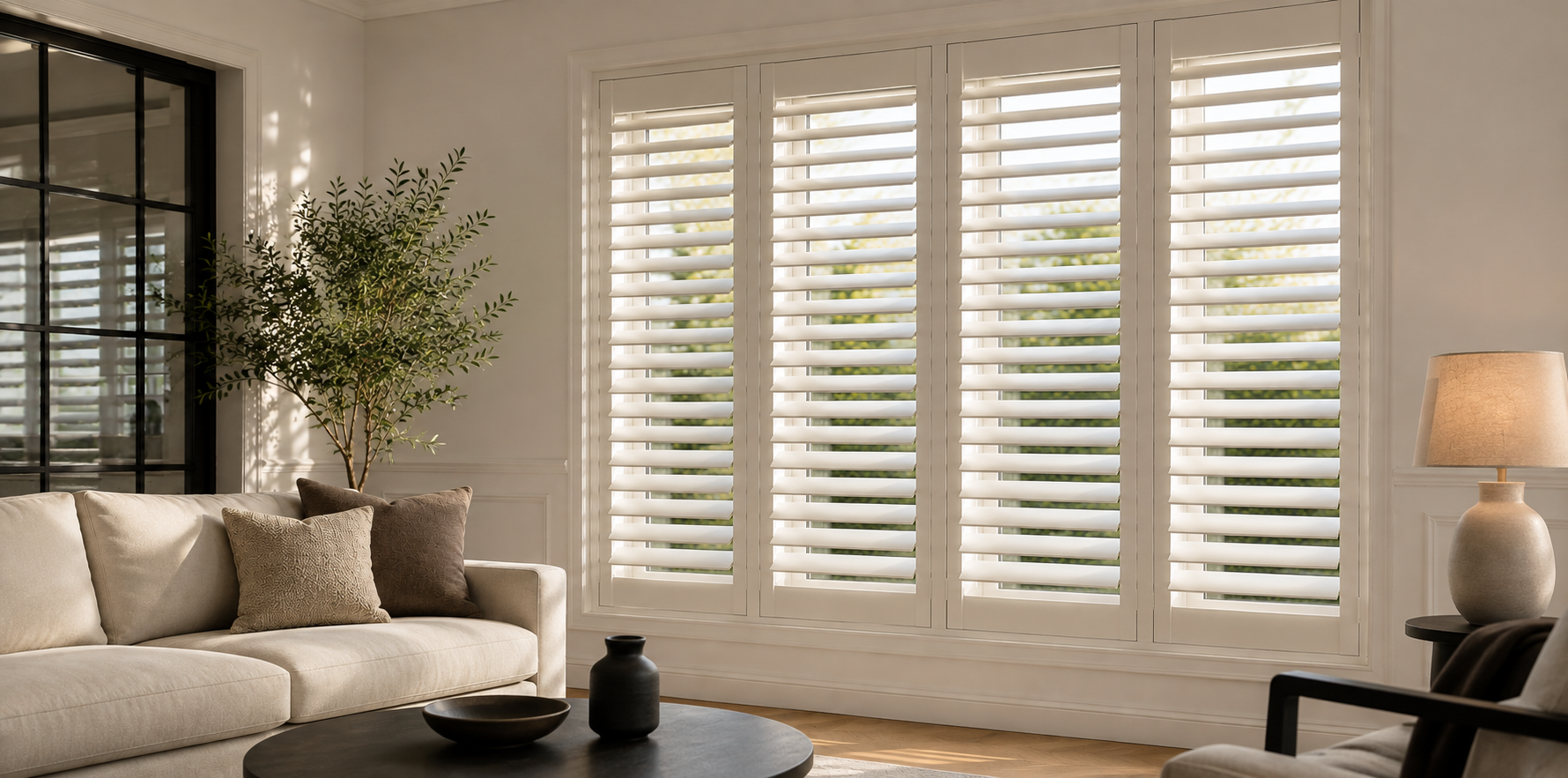
Choosing internal plantation shutters is about more than selecting a colour or finish. The right combination of material, louvre size and configuration can vary from room to room, depending on factors such as moisture, window size, sunlight, privacy and the look you want to create. Indoor plantation shutters are available in different materials and louvre sizes, each offering its own balance of durability, light control, insulation and style. This guide looks at how plantation shutters interior options compare and what to consider when choosing window shutters interior solutions that work well for your home.
What Are Internal Plantation Shutters?
Internal plantation shutters are window coverings fitted within the interior of a window opening, using a frame, hinged or sliding panels, and adjustable horizontal louvres to control light, privacy and airflow. Also called indoor plantation shutters or window shutters interior, they sit neatly inside the home rather than externally over the window.
PVC, basswood or aluminium - which shutter material should you choose?
The right material for internal plantation shutters depends on more than appearance. Consider where the shutters will be installed, how much moisture the room receives, the size of the window and how much maintenance you are comfortable with. PVC, basswood and aluminium each solve different practical needs, so the best choice is the one that suits the room as well as the overall plantation shutters interior style.
PVC and polymer shutters
PVC and polymer shutters are well suited to areas where moisture and everyday cleaning are concerns. Their resistance to moisture makes them a practical option for bathrooms, laundries and kitchens. They are easy to wipe clean, although wider panels can become heavier because of the material. Quality also matters: well-made PVC shutters generally offer a more refined finish, construction and colour consistency than cheaper alternatives.
Basswood and timber shutters
Basswood and timber bring natural grain and warmth to a room, making them a popular choice for bedrooms, living areas and other dry interiors. Their lighter weight can also be useful on taller panels, while timber can provide useful insulating properties. However, natural timber needs more care in areas exposed to constant humidity, where moisture can affect its long-term performance.
Aluminium shutters
Aluminium offers strength, durability and greater tolerance of demanding conditions. While it can be used indoors, its particular advantages are often more relevant around semi-exposed or alfresco-facing openings where weather exposure is a consideration. The choice ultimately comes down to balancing the room’s conditions with the appearance and performance you want from your indoor plantation shutters.
Which shutter material works best in each room?
PVC, basswood or aluminium — which shutter material should you choose?
Once you’ve narrowed down the style of your internal plantation shutters, the material becomes an important practical decision. PVC, basswood and aluminium can all work well, but they suit different conditions. Consider where the shutters will be installed, how much moisture or exposure they will face, the size of the panels and how each different materials need to be cleaned. The trade-off is usually between durability, weight, appearance and how well the material handles the room.
PVC and polymer shutters
PVC and polymer shutters are worth considering where moisture, cleaning and everyday durability are priorities. They are resistant to moisture and easy to wipe clean, making them practical for bathrooms, laundries and kitchens. The trade-off is weight: wider or larger panels can be heavier, so the panel size and configuration matter. Finish quality also varies, with better-made PVC generally providing a cleaner, more consistent appearance than lower-cost alternatives.
Basswood and timber shutters
Basswood and timber bring natural grain and warmth to plantation shutters interior designs. Their relatively light weight can be useful for taller panels, while timber also offers useful insulating properties. They are generally better suited to dry rooms, however, as prolonged exposure to humidity requires more care and can affect natural timber over time.
Aluminium shutters
Aluminium provides strength and durability where the shutters may face more demanding conditions. It can be used indoors, but its advantages become particularly relevant around semi-exposed or alfresco-facing openings. For standard interior rooms, the choice is more likely to come down to the balance between appearance, panel requirements and environmental exposure.
What louvre size should you choose?
Louvre size affects how your internal plantation shutters look and how much light and outside view you get when the shutters are open. The three common options – 2.5″, 3.5″ and 4.5″ – can all work well, but the right choice depends on your window size, room style and how much light and privacy control you want.
- 2.5″ louvres: The narrower option, often suited to smaller windows or spaces where you want finer control over light and privacy. They also create a more traditional shutter appearance.
- 3.5″ louvres: A versatile middle option that works across many window sizes and interior styles. They offer a balanced combination of light, view and privacy.
- 4.5″ louvres: The widest option, often suited to larger windows and more contemporary interiors. Fewer, wider louvres can create a cleaner look and provide a broader outside view when opened.
Do plantation shutters block out all the light?
Plantation shutters offer strong light control, but they do not create complete blackout conditions on their own. Even when the louvres are fully closed, small amounts of light can enter between the louvres and around the frame. If a room needs near-total darkness, such as a bedroom or media room, consider pairing your window shutters interior with:
- Blackout curtains for an extra layer of light blocking.
- Blockout blinds fitted behind the shutters.
- A well-fitted frame and professional installation to help reduce light gaps around the window.
What changes the price of plantation shutters?
The cost of internal plantation shutters is influenced by more than the size of the window. The material, louvre size, frame, panel configuration and installation requirements can all change the final quote. When comparing options, look beyond the headline price and check whether each quote includes the same specification.
- Material: PVC, basswood and aluminium can have different price points and performance characteristics.
- Louvre size: Different louvre widths may affect the overall product and configuration.
- Frame and panels: Larger openings, additional panels or more complex frame arrangements can increase the cost.
- Installation: Window condition, measurements and fitting requirements can affect the final price.
- Product quality: A cheaper quote may reflect different construction, materials or finishes rather than better value.
How to decide on the right shutters for your home
Choosing the right indoor plantation shutters becomes easier when you work through the practical factors in order. Start with the room’s moisture, sunlight and exposure, then consider the window’s size, proportions and how you want the shutters to operate.
At your measure, discuss:
- Room conditions: Moisture, humidity, sunlight and exposure.
- Window size: Opening dimensions, panel requirements and available space.
- Light and privacy: How much daylight, airflow and outside view you want.
- Style: Material, colour, louvre size and overall finish.
Once these details are clear, the right combination becomes much easier to narrow down. Ready to explore your options? Talk to Marvel Blinds for expert advice and a measure tailored to your windows and home.
Final Thoughts
The reason designers continue recommending layered window furnishings is simple.
They solve multiple problems at once.
The right combination of sheer curtains Perth homeowners love and carefully selected blinds creates privacy, light control, comfort, and visual balance without making a room feel heavy.
Whether you’re styling a bedroom, updating a living area, or furnishing large sliding doors, layering often provides more flexibility than choosing curtains or blinds alone.
At Marvel Blinds, homeowners can choose from custom-made curtains, roller blinds, and panel glide blinds designed to suit Perth homes and lifestyles. With local manufacturing experience dating back to 2011 and a strong focus on quality craftsmanship, the team helps create window furnishing combinations that feel considered from every angle.
Thinking about updating your windows? Book a consultation with Marvel Blinds and discover how custom sheer curtains, blinds, and tailored window furnishing solutions can help bring your vision together.
FAQs
The main types of interior shutters are generally distinguished by their material, louvre size and panel configuration. Common materials include PVC or polymer, timber such as basswood, and aluminium. Indoor plantation shutters can also be configured as hinged, sliding, bi-fold or fixed panels depending on the window and available space.
Internal plantation shutters are usually fitted to a frame that is secured around the window opening, with the shutter panels attached to the frame using hinges or the appropriate operating hardware. The exact installation depends on the window opening, frame style and shutter configuration. Accurate measuring and fitting help ensure the panels operate properly and gaps around the frame are kept to a minimum.
Measuring for interior plantation shutters involves checking the width and height of the window opening at multiple points, which is why it's important to know when to book your measure during a build, as openings are not always perfectly square. You also need to consider the reveal, frame depth, handles and how the panels will open. For a made-to-measure installation, a professional measure can account for these details before the shutters are manufactured.
There is no single best material for every home. PVC or polymer shutters can be practical in moisture-prone rooms, while basswood and timber can suit dry living spaces where natural grain and warmth are important. Aluminium shutters may be worth considering where strength and greater exposure tolerance are priorities. The right choice depends on the room, window and how the shutters will be used.
PVC and vinyl are often used to describe similar synthetic shutter products, but the terms do not necessarily mean exactly the same construction. When comparing them, look beyond the material name and consider the shutter's build quality, weight, finish, moisture resistance and warranty. For indoor plantation shutters, the quality of the specific product can matter as much as the general material category.
Neither is automatically better; they suit different requirements. PVC or polymer shutters can be a practical choice where moisture resistance and easy cleaning are important. Aluminium offers greater strength and can make more sense for demanding or semi-exposed applications. For standard interior windows, consider the room's conditions, panel size, appearance and how the shutters will be used before choosing between them.
Plantation shutters offer strong light, privacy and ventilation control, but they have some limitations. They generally cost more upfront than simpler window coverings, and their fixed frame and panels can require more planning around window handles, furniture and opening space. They also do not provide complete blackout on their own, as small amounts of light can enter between the louvres and around the frame.
No. Plantation shutters remain a relevant interior window treatment because their appeal is based on practical features such as adjustable light control, privacy, ventilation and a clean architectural appearance. They can also be a long-term investment, particularly when considering what shutters add to a home's value. The choice of louvre size, material, colour and panel configuration can also change how contemporary they look. For a plantation shutters interior style, wider louvres and simple finishes can create a more modern appearance.